01 · Feature
Split the bill, built in
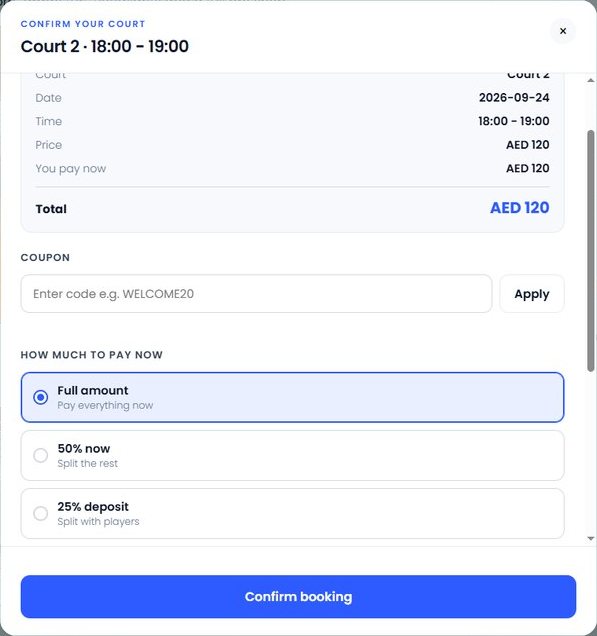
Book a court and invite up to three partners, each of whom gets their own invitation to pay their share, so no one chases anyone for cash.
Court booking, split payments, tournaments and a full operator console — delivered as one ASP.NET Core 8 application with a customer website, installable mobile app, REST API and admin console.
Five things that distinguish PadelNation from general-purpose booking software.
Book a court and invite up to three partners, each of whom gets their own invitation to pay their share, so no one chases anyone for cash.
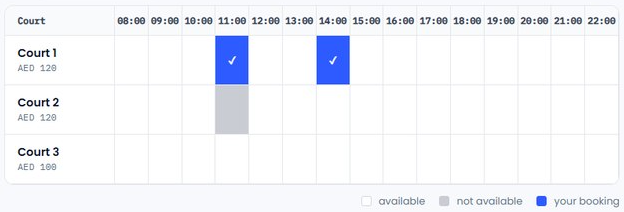
A booking reserves every half-hour it actually occupies, so a 90-minute game blocks the full 90 minutes and the grid never offers a time that will fail at checkout.
Front-desk bookings and app bookings write to the same live availability and the same rate card, so a court can never be sold twice or at two different prices.
Customers add it to their home screen straight from the browser and it opens full-screen like a native app — no download, no review queue, no update to push.

Prices in AED, times in Gulf Standard Time and mobile-number sign-in, rather than a global platform retro-fitted to the region.
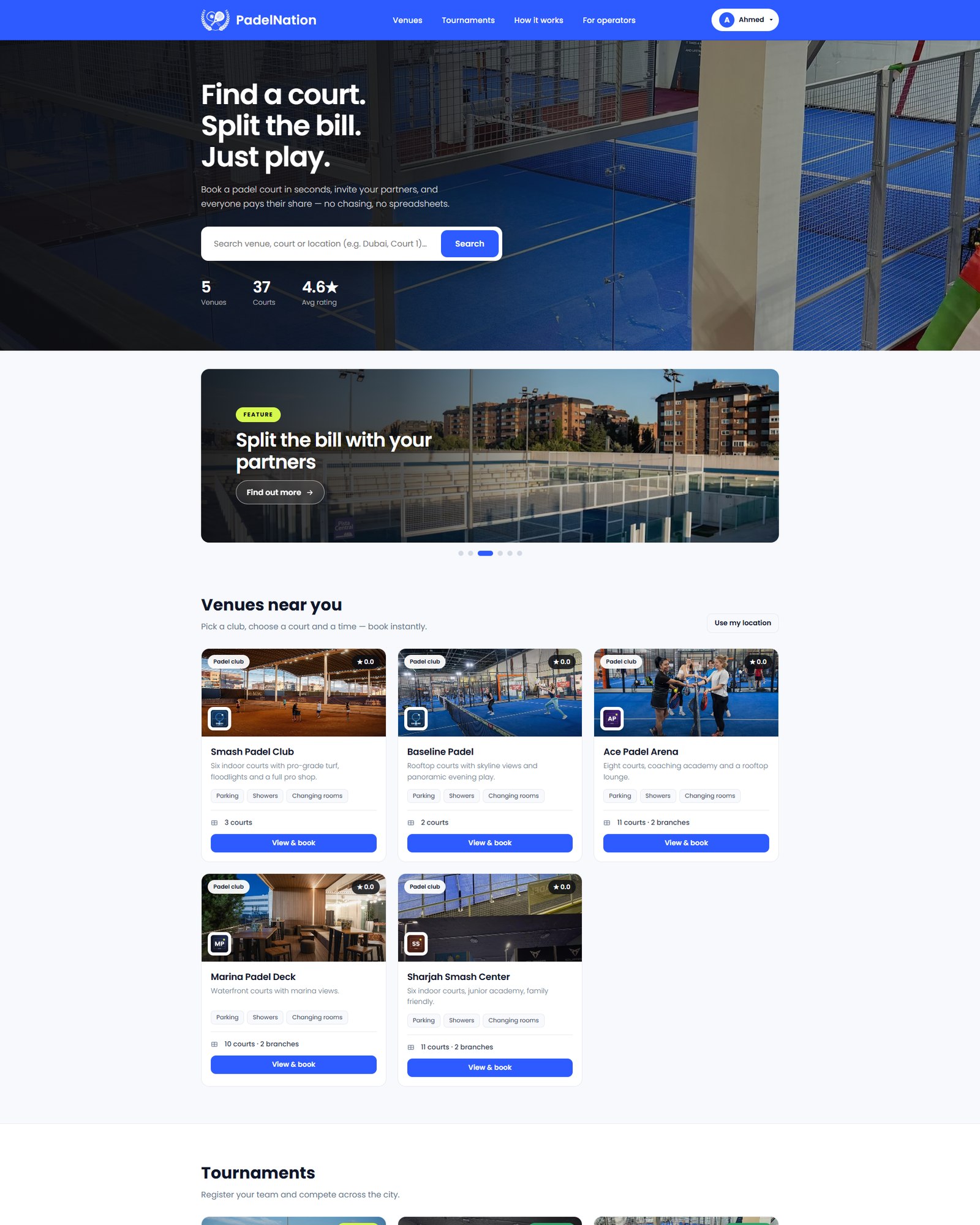
Players find a venue by search or GPS, pick a court and time slot, book with a deposit, and split the bill with up to three partners.
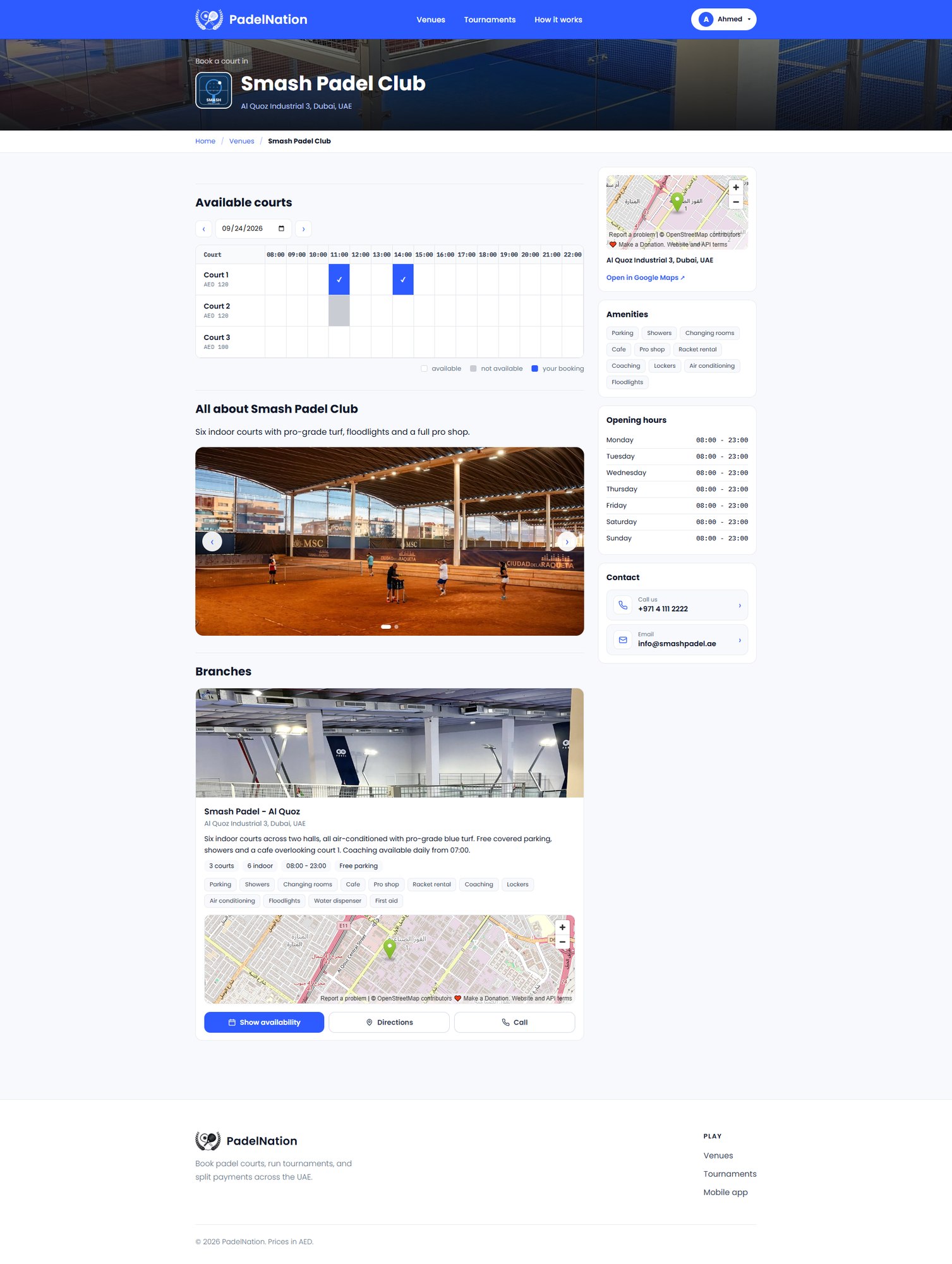
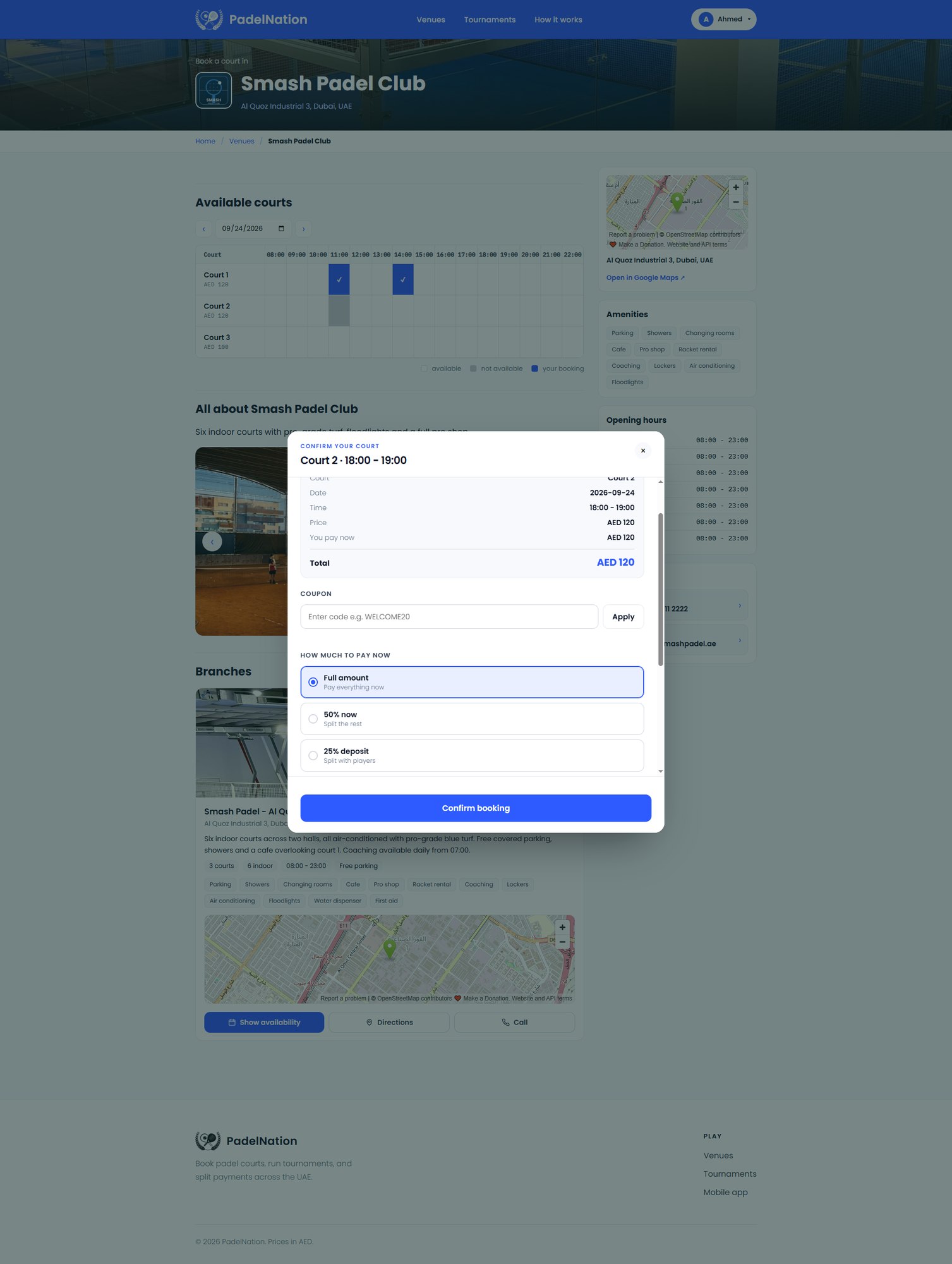
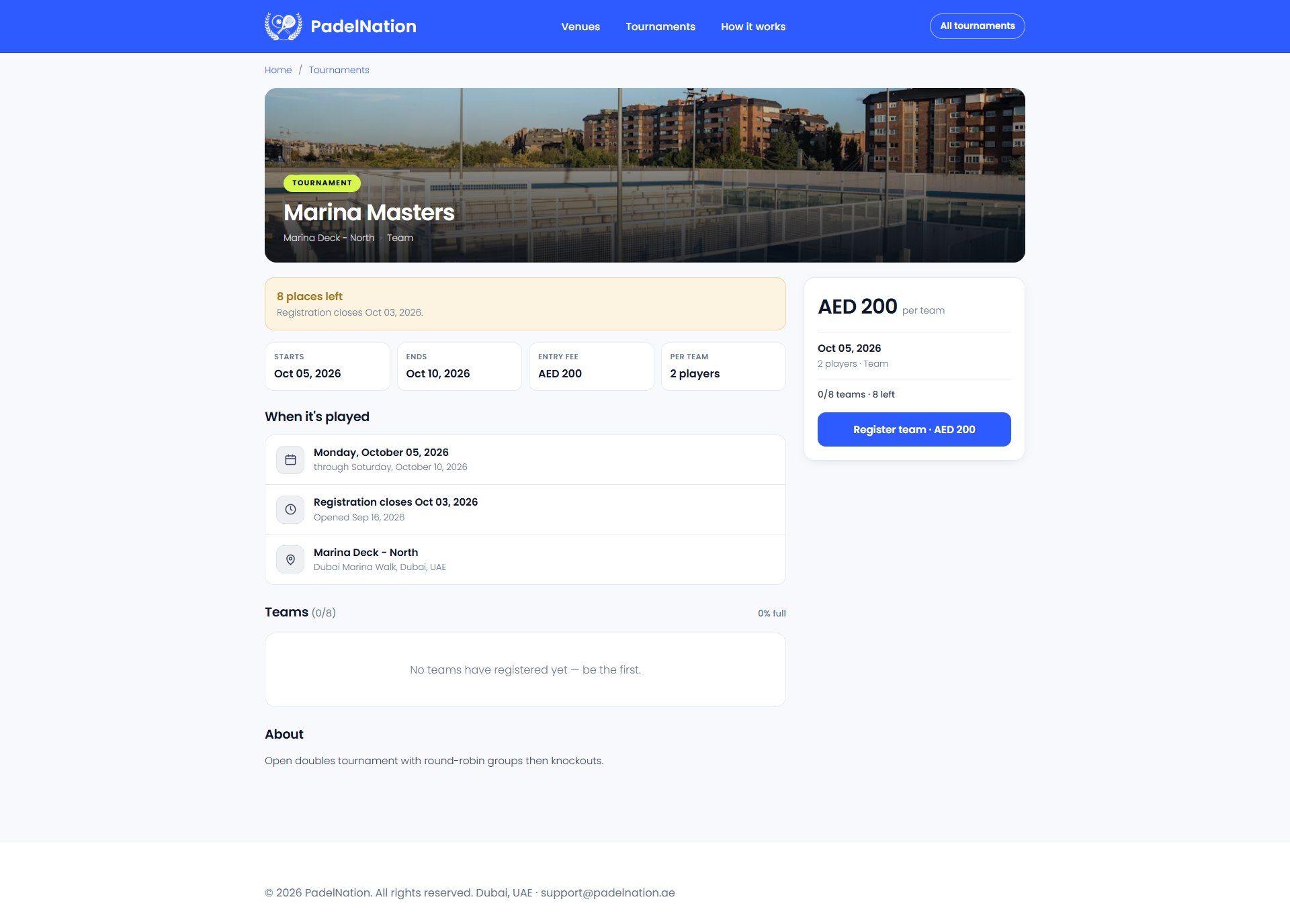
Players book, split and compete. Venue operators manage courts and pricing, take walk-ins on a live calendar, and report on revenue and commission.
Find a venue by search or GPS.
Pick a court and time slot, book with a deposit.
Invite up to three partners to share the cost of a court.
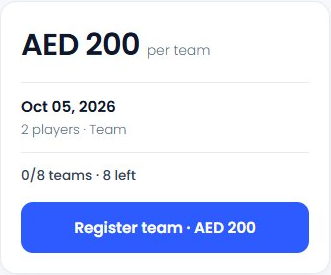
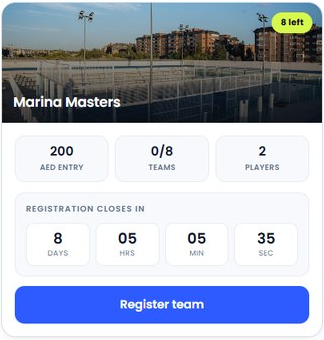
Team registration with entry fees and capacity.
A live booking calendar for walk-ins, on the same availability as the app.
Manage venues, branches, courts, members and bookings.
Run tournaments and promotions, report on revenue and commission.
One ASP.NET Core 8 application serving four faces.
Four projects, dependencies pointing inward only — swapping the database or the web framework touches only the outer rings.
Two data paths, deliberately. Writes go through EF Core for change tracking, transactions and a unit of work. List, report and availability screens read through hand-tuned Dapper SQL against indexed tables.
One command brings up SQL Server, applies the schema, loads demo data and starts the application.
ASP.NET Core runtime, managed by systemd behind an Nginx reverse proxy.
IIS in-process hosting via the .NET 8 Hosting Bundle.
The project can be modified with Claude, Codex and Antigravity. Open the solution in your AI coding agent of choice and build on it.

These have database tables and operator screens in place, with the business logic still to be built. Listed here rather than presented as working features.

Customer website, installable app, REST API and operator console — in one .NET 8 solution with source, database scripts, documentation and a Docker stack.